PDF Ebook Uniquely Human: A Different Way of Seeing Autism, by Barry M. Prizant
Once more, reading routine will constantly offer valuable perks for you. You might not should spend sometimes to read the e-book Uniquely Human: A Different Way Of Seeing Autism, By Barry M. Prizant Just reserved several times in our extra or free times while having dish or in your workplace to check out. This Uniquely Human: A Different Way Of Seeing Autism, By Barry M. Prizant will reveal you new thing that you can do now. It will certainly aid you to enhance the high quality of your life. Occasion it is merely an enjoyable book Uniquely Human: A Different Way Of Seeing Autism, By Barry M. Prizant, you can be happier as well as much more enjoyable to enjoy reading.
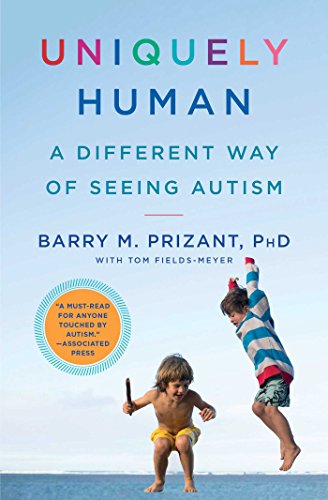
Uniquely Human: A Different Way of Seeing Autism, by Barry M. Prizant

PDF Ebook Uniquely Human: A Different Way of Seeing Autism, by Barry M. Prizant
Uniquely Human: A Different Way Of Seeing Autism, By Barry M. Prizant. Someday, you will certainly uncover a new experience and also understanding by investing more money. However when? Do you believe that you need to acquire those all needs when having significantly money? Why do not you aim to obtain something basic initially? That's something that will lead you to recognize more regarding the world, journey, some locations, past history, entertainment, and also much more? It is your personal time to proceed checking out practice. Among the publications you could enjoy now is Uniquely Human: A Different Way Of Seeing Autism, By Barry M. Prizant right here.
Yet, just what's your matter not as well liked reading Uniquely Human: A Different Way Of Seeing Autism, By Barry M. Prizant It is an excellent activity that will certainly consistently offer wonderful benefits. Why you come to be so strange of it? Lots of things can be practical why people do not like to check out Uniquely Human: A Different Way Of Seeing Autism, By Barry M. Prizant It can be the uninteresting activities, guide Uniquely Human: A Different Way Of Seeing Autism, By Barry M. Prizant collections to read, even lazy to bring nooks almost everywhere. But now, for this Uniquely Human: A Different Way Of Seeing Autism, By Barry M. Prizant, you will certainly begin to like reading. Why? Do you understand why? Read this page by finished.
Starting from seeing this website, you have actually tried to start loving reviewing a book Uniquely Human: A Different Way Of Seeing Autism, By Barry M. Prizant This is specialized website that market hundreds compilations of publications Uniquely Human: A Different Way Of Seeing Autism, By Barry M. Prizant from whole lots sources. So, you won't be tired anymore to choose guide. Besides, if you also have no time at all to browse guide Uniquely Human: A Different Way Of Seeing Autism, By Barry M. Prizant, simply sit when you remain in workplace as well as open the internet browser. You can discover this Uniquely Human: A Different Way Of Seeing Autism, By Barry M. Prizant lodge this site by attaching to the web.
Obtain the connect to download this Uniquely Human: A Different Way Of Seeing Autism, By Barry M. Prizant and also start downloading and install. You can desire the download soft data of the book Uniquely Human: A Different Way Of Seeing Autism, By Barry M. Prizant by undergoing various other activities. Which's all done. Currently, your rely on check out a book is not constantly taking and carrying guide Uniquely Human: A Different Way Of Seeing Autism, By Barry M. Prizant anywhere you go. You can conserve the soft file in your gadget that will certainly never be far and review it as you such as. It resembles reading story tale from your gizmo then. Currently, start to love reading Uniquely Human: A Different Way Of Seeing Autism, By Barry M. Prizant and also get your new life!
A groundbreaking book on autism, by one of the world’s leading experts, who portrays autism as a unique way of being human—this is “required reading....Breathtakingly simple and profoundly positive” (Chicago Tribune).
Autism therapy typically focuses on ridding individuals of “autistic” symptoms such as difficulties interacting socially, problems in communicating, sensory challenges, and repetitive behavior patterns. Now Dr. Barry M. Prizant offers a new and compelling paradigm: the most successful approaches to autism don’t aim at fixing a person by eliminating symptoms, but rather seeking to understand the individual’s experience and what underlies the behavior.
“A must-read for anyone touched by autism... Dr. Prizant’s Uniquely Human is a crucial step in promoting better understanding and a more humane approach” (Associated Press). Instead of classifying “autistic” behaviors as signs of pathology, Dr. Prizant sees them as part of a range of strategies to cope with a world that feels chaotic and overwhelming. Rather than curb these behaviors, it’s better to enhance abilities, build on strengths, and offer supports that will lead to more desirable behavior and a better quality of life.
“A remarkable approach to autism....A truly impactful, necessary book” (Kirkus Reviews, starred review), Uniquely Human offers inspiration and practical advice drawn from Dr. Prizant’s four-decade career. It conveys a deep respect for people with autism and their own unique qualities. Filled with humanity and wisdom, Uniquely Human “should reassure parents and caregivers of kids with autism and any other disability that their kids are not broken, but, indeed, special” (Booklist, starred review).
- Sales Rank: #27321 in Books
- Published on: 2016-07-19
- Released on: 2016-07-19
- Original language: English
- Number of items: 1
- Dimensions: 8.37" h x .70" w x 5.50" l, .0 pounds
- Binding: Paperback
- 272 pages
Review
"With the precision of a consummate scientist combined with the wisdom of a sage, Barry leverages his deep understanding of people with autism, revealing that individuals on the spectrum are just like everyone else - but perhaps just more so.� This unique book is a must read for anyone desiring a deeper understanding, through the lens of a seasoned and mindful professional in the field of autism, answering the bigger question what it means to be human".
�
Stephen Mark Shore, Ed.D.
Clinical Assistant Professor of Special Education at Adelphi University
Autistic Self-Advocate, Internationally renowned author of 4 books,consultant
"Autism was initially described in 1943, and now with�Uniquely Human, it is rediscovered 70 years later�as a shared human experience. Autism is part of every community, and this tour of autism changes everything. �Now, autism makes sense, and tomorrow looks a whole lot brighter for everyone.� Stop what you are doing.� Read this book.� It's a masterpiece".�
�
- Carol Gray, Educator, Developer of Social Stories, International Consultant to Individuals with Autism�
"This is by far the most empathic, wise, and insightful book I have ever read about autism, and is one of the most empathic and wise books�I've ever read about being human. I can't overstate the transformative power of this book: it breaks open the heart, extends vision where there was only fog, and inspires keen insight where there was only reflexive response."
�
-- Rabbi Bradley Shavit Artson, Vice President and Dean's Chair,�American JewishUniversity, Ziegler School of Rabbinic Studies and parent
"Uniquely Human is an amazing book! It will change our perception and understanding of autism.� Barry Prizant has an intuitive understanding of autism spectrum disorders and the wisdom of four decades of experience. I strongly recommend this book to parents and professionals, and congratulate Barry for writing the book that needed to be written".�
�
--Tony Attwood, Ph.D.�Author of The Complete Guide to Asperger's Syndrome
"I have read a million and one books on autism.� "Uniquely Human" is the best book I have ever read, hands down...the paradigm of autism books.�Thank you Barry for this incredible gift!!!!
- Navah Paskovitz, Mother of three boys with autism, parent advocate
"Refreshing--and constructive.... It should be required reading for all educators and practitioners working with autism....Breathtakingly simple and profoundly positive." (Chicago Tribune)
"A remarkable approach to autism....A truly impactful, necessary book." (Kirkus Reviews, starred review)
"Uniquely Human is not just the perfect title for Barry Prizant's book, it's also an appropriate summation of Dr. Prizant's career. Though a clinical scholar, he is a humanist first, and always has been—a professional who is fascinated by unexamined lives that could be lived happily, yet aren't. With every brilliant, illuminating example in his book, he steers us away from the traditional fix-it mentality and towards the beatific, personally rewarding detective work that the entire spectrum world would be well served to adopt. Thanks be to Barry for the first-ever ‘must read’ written for parents, educators, and clinicians." (Michael John Carley, Founder, GRASP; Author of Asperger's From the Inside-Out)
"Uniquely Human is brilliant. A revolution.” (Steve Silberman, author of NeuroTribes)
"Dr. Prizant explains the causes of behaviors associated with autism. I love his approach for understanding problems with sensory overload, anxiety and discomfort. He provides common sense, practical advice based on a 40-year career working in the trenches with both parents and teachers." (Temple Grandin, author of The Autistic Brain and The Way I See It)
About the Author
Barry M. Prizant, PhD, CCC-SLP, is among the world's leading authorities on autism, with more than forty years of experience as a scholar, researcher, and international consultant. He is an adjunct professor at Brown University and coauthor of The SCERTS Model: A Comprehensive Educational Approach, now being implemented in more than a dozen countries. Dr. Prizant has published more than 120 articles and chapters and has received many awards for his career in supporting autistic persons and related disabilities and their families. Dr. Prizant lives in Cranston, Rhode Island, with his wife, Dr. Elaine Meyer.
Excerpt. � Reprinted by permission. All rights reserved.
Uniquely Human CHAPTER 1 Ask “Why?”
THE first thing I noticed about Jesse was the fear and anxiety in his eyes.
I was visiting a small New England school district when I heard about an eight-year-old boy who had recently transferred from a nearby district. There he had earned a dubious distinction: administrators called Jesse the worst behavior problem they had ever encountered.
It wasn’t difficult to understand why, given his challenges. Jesse, a sturdy boy with straight brown hair and wire-rimmed glasses, struggled with severe social anxiety, extreme sensitivity to touch, and difficulty processing language. He also had a seizure disorder that was detected when he was a toddler, about the time he lost the ability to speak. He communicated with little more than guttural sounds and grunts, pushing away people and objects or physically leading people to what he wanted.
Since it was so difficult for Jesse to make his needs known, he often seemed aggravated and miserable. He sometimes took out his frustration and anxiety on himself, pounding his fists against his thighs and his forehead, covering his body with bruises. When teachers tried to direct him from one activity to the next, he often reacted with flailing limbs or by pushing them away with his arms or legs. Reports from the previous school described kicking, scratching, and biting episodes escalating into fits so severe that almost daily, three or four adults had to pin the boy down to subdue him, then isolate him in a “time-out” room.
The staff had interpreted all of this as willful, uncooperative behavior. But Jesse’s mother knew better. She understood that his actions were his way of communicating—a direct reflection of his confusion, agitation, and fear. When she explained to the administrators that her son struggled with sensory challenges that made him unusually sensitive to loud noises and being touched, they had been dismissive. Clearly, they insisted, the boy was displaying noncompliant behavior. In their eyes, Jesse was strong-willed, stubborn, and defiant, and their response was to try to break him—to treat him as a trainer would treat a horse.
What did these educators offer to help Jesse learn to communicate? Practically nothing. The district’s policy was to focus first on controlling a child’s behavior, and, only after achieving success, to address the area of communication.
They had it all wrong.
I had heard so many awful things about Jesse that I was intrigued to come face-to-face with him. When I finally did, I didn’t observe any of what I had heard described—not the defiance, not the aggression, not the willful disobedience. What I saw was a boy who was understandably frightened, anxious, and constantly on guard. And I saw something else: Jesse’s extreme vigilance and anxiety were manifestations of the inevitable damage that occurs when people—however well meaning—completely misunderstand the behavior of individuals with autism.
How does this happen? The short answer is that caregivers neglect to ask “Why?” They don’t listen carefully or observe closely. Instead of seeking to understand the child’s perspective and experience, they simply try to manage the behavior.
Unfortunately this behavioral-assessment approach—that is, using a checklist of deficits—has become the standard way of determining whether a person has autism. We say a child has autism if he displays a combination of traits and behaviors that are deemed to be problematic: difficulty in communicating, trouble developing relationships, and a restricted repertoire of interests and behaviors, including repetitive speech—known as echolalia—and actions, such as rocking, arm flapping, and spinning. Professionals observe these “autistic behaviors” and then assess the people who display them by using a sort of circular reasoning: Why does Rachel flap her hands? Because she has autism. Why has she been diagnosed with autism? Because she flaps.
Following this approach means defining a child as the sum of his deficits. How best to help such a child? By managing those behaviors or attempting to get rid of them: to halt the rocking, to squelch the echoing speech, to reduce the flapping. And what denotes success? The more we can make a child look and act “normal,” the better.
This way of understanding and supporting people with autism is sorely lacking. It treats the person as a problem to be solved rather than an individual to be understood. It fails to show respect for the individual and ignores that person’s perspective and experience. It neglects the importance of listening, paying close attention to what the person is trying to tell us, whether through speech or patterns of behavior.
On top of that, in my experience it doesn’t work—and often makes things worse.
What’s more helpful is to dig deeper: to ask what is motivating these behaviors, what is underlying these patterns. It’s more appropriate, and more effective, to ask “Why?” Why is she rocking? Why does he line up his toy cars that way, and why only when he arrives home from school? Why does he stare at his hands fluttering in front of his eyes, and always during English class and recess? Why does she repeat certain phrases when she is upset?
The Challenge of Dysregulation
Usually the answer is that the person is experiencing some degree of emotional dysregulation. When we are well regulated emotionally, we are most available for learning and engaging with others. We all strive to be alert, focused, and prepared to participate in activities in our daily lives. Our neurological systems help by filtering out excessive stimulation, telling us when we’re hungry or tired or when to protect ourselves from danger. People with autism, primarily due to underlying neurology (the way the brain’s wiring works), are unusually vulnerable to everyday emotional and physiological challenges. So they experience more feelings of discomfort, anxiety, and confusion than others. They also have more difficulty learning how to cope with these feelings and challenges.
To be clear: Difficulty staying well regulated emotionally and physiologically should be a core, defining feature of autism. Unfortunately professionals have long overlooked this, focusing on the resulting behaviors instead of the underlying causes.
If you know a person with autism, consider what makes this person less able to stay well regulated: problems in communicating, environments that are chaotic, people who are confusing because they talk or move too quickly, unexpected change, excessive worry about things that are uncertain. Then there are associated challenges, such as sensory sensitivities to touch and sound, motor and movement disturbances, sleep deprivation, allergies, and gastrointestinal issues.
Of course people with autism aren’t alone in experiencing these challenges. We all feel dysregulated from time to time. Speaking in front of a large audience, you might feel sweat collecting on your brow, your hands might quiver, your heart might race. Wearing a scratchy wool sweater might be so irritating that you can’t focus. When your normal morning routine—coffee, newspaper, shower—is thrown off by an unexpected intrusion, you might feel out of sorts for the rest of the morning. When these factors accumulate—you miss sleep, you’re under a deadline, you skip lunch, and then your computer crashes—it’s easy to become extremely agitated.
We all have these challenges, but people with autism are unusually ill equipped to deal with them because of their neurology. That makes them far more vulnerable than others—that is, their threshold can be much lower—and they have fewer innate coping strategies. In many cases, they also have sensory-processing differences: they are either highly sensitive or undersensitive to sound, light, touch, and other sensations and therefore less able to manage. In addition many people with autism are innately unaware of how others might interpret their actions when they are dysregulated.
Feeling emotionally dysregulated affects different people in different ways. Often the reactions are immediate and impulsive. A child’s behavior may shift suddenly, with no apparent cause. When a child is exposed to a loud noise, for instance, he might drop to the floor. I often see children refuse to enter a gym class or the school cafeteria. Their teachers might mistakenly believe that this is willful disobedience, a planned attempt to escape an activity the child doesn’t enjoy. The reason is typically much deeper than that: the child can’t bear the volume or quality of the noise or the chaos of the setting.
When I worked in a preschool autism program based in a hospital, the children ate lunch in the classroom on trays brought up from the hospital cafeteria. Once a teacher and I led the four- and five-year-olds to the cafeteria’s kitchen so they could see how the trays were cleaned. At exactly the moment we arrived, the industrial-size dishwasher spewed forth steam and suddenly emitted a high-frequency SSSHHHH! Instantly all the children dropped their trays, some covered their ears and screamed, and they ran for the exit. It was as if a monster had suddenly appeared, inches from their faces.
That’s dysregulation, sudden and visible.
Sometimes the cause of dysregulation is less obvious. While visiting a preschool where I consulted, I was walking outdoors with Dylan, a four-year-old with autism, when suddenly and without warning, he dropped to the ground and refused to proceed. I gently picked him up and helped him along, but soon he dropped again. As I helped him again, we heard a dog barking. He immediately panicked and tried to run away from the sound. It dawned on me that Dylan, with his hypersensitive hearing, had heard the dog all along, but its bark had been so distant that it hadn’t registered with me. What might have appeared as uncooperative, random, or defiant behavior was in fact a very understandable expression of fear.
That too is dysregulation.
Many children with autism flap their arms, either as an expression of their level of excitement or to calm themselves. When Conner felt joyful, and sometimes when he was anxious about a transition between activities, he did what his parents called his “happy dance.” He stood on his toes and stepped forward, then back, while flicking his fingers in front of his eyes. An earlier therapist had advised Conner’s parents to respond with a firm “Hands down!” And if he didn’t comply: “Sit down, sit on hands!” (To their credit, his parents ignored the suggestion, instead helping Conner to label his feelings or easing transitions by telling him what to expect.)
It’s easy to dismiss flapping or rocking or dancing as just so much “autistic behavior.” But parents raising children with autism, and the professionals who work with them, need to take an extra step. Like detectives, we need to examine and consider all available clues and work to discern what is underlying or triggering a particular reaction. What is making the child dysregulated? Is it internal or external? Is it visible? Is it in the sensory realm? Is it pain, or physical discomfort, or a traumatic memory? In most cases the child can’t explain the behavior in words, so it’s up to those close to him to sort through the clues.
Coping Strategies and Regulating Behaviors
Here is the important irony: Most of the behaviors commonly labeled “autistic behaviors” aren’t actually deficits at all. They’re strategies the person uses to feel better regulated emotionally.
In other words, in many cases they’re strengths.
When a child with extreme sensory sensitivities enters a noisy room and cups his hands over his ears and rocks his body, this pattern of behavior is simultaneously a sign of dysregulation and a coping strategy. You could call it “autistic behavior.” Or you could ask “Why is he doing that?” The answer is twofold: the child is revealing that something is amiss and that he has developed a response to shut out what is causing him anxiety.
Whether or not we realize it, all humans employ these rituals and habits to help us regulate ourselves—soothe ourselves, calm our minds and bodies, and help us cope. Perhaps, like many people, you find public speaking unnerving. To calm yourself, you might take a series of deep breaths or pace back and forth while you speak. That’s not exactly the way humans typically breathe or behave in public, but an observer would not judge this as deviant behavior. The person would understand that it’s your way to cope with the stress of the situation and to soothe your nerves so that you can do your best.
When I return home from a day of work, I immediately check the mailbox, then sort the mail, placing bills in one pile, magazines in another, and tossing what I don’t need in the recycling bin. It would take a significant distraction for me to skip that small but important ritual; then I would feel out of sorts on some level until I took care of it. It’s a calming routine; it’s how I come home. When my wife has had a bad day or feels worried, she organizes and cleans. If I come home and find our home more immaculate than usual, I know that something is bothering her. Religious services include layers of comforting rituals—chanting and praying, symbolic gestures and body movements—to enable people to let go of the worries and trivialities of everyday life and enter a higher spiritual realm.
For people with autism, comforting rituals and coping mechanisms come in all varieties: moving in particular ways, speaking in various patterns, carrying familiar items, lining up objects to create predictable and unchanging surroundings. Even proximity to certain people can serve as a regulating strategy.
After coming home from a busy school day, Aaron, who was eight, had a habit of placing both palms on a table in front of him and then rhythmically jumping in place. His parents noted that the intensity and duration of his jumping were a good barometer of how stressful his day had been. Just as infants are comforted and soothed by being rocked, and toddlers run in circles to stay awake, we all use movement to modulate our emotional and physiological arousal. If people with autism feel underaroused, they increase their alertness by spinning, bouncing, or swinging. If they’re overstimulated, they might calm themselves by pacing, snapping their fingers, or staring at a fan.
Many people call these simply “behaviors.” Again and again I have heard parents or educators describe children as having “behaviors.” Don’t we all? It’s only in the field of autism that the word behavior—without any modifier—has a negative connotation. “Our new student, Sally, has really got a lot of behaviors,” a teacher will say. Or “We’re working on getting rid of Scott’s behaviors.” Others use the term stim or stimming (for repetitive, self-stimulatory behavior), terms that also have negative connotations. In earlier decades many researchers aimed to rid children of stims, some employing punishment and even shock as a means to eliminate “autistic behaviors.”
We should not view these merely as behaviors, however. They are most often strategies to cope with dysregulation.
When an American psychiatrist named Leo Kanner first introduced the autism diagnosis, in 1943, he noticed a striking trait among the children he described. He called it “insistence on preservation of sameness” (a trait still considered definitive of autism). Indeed many children with autism regulate themselves by trying to control their surroundings—by seeking sameness. That isn’t a pathological symptom. It’s a coping strategy.
Every time Clayton returned home, he would survey every window in the house, adjusting the blinds so they were all at exactly the same height. Why? He was trying to ground himself by taking control and making his environment predictable and visually symmetrical. Others habitually eat the same foods, close all the cabinet doors in the classroom, watch the same DVD over and over, or insist on sitting in the same chair every day.
Are rituals like Clayton’s indications of Obsessive-Compulsive Disorder? Actually their impact is quite different. True OCD behavior is disruptive and rarely serves to make the person feel better. In other words, the need to repeatedly wash one’s hands or to touch every chair before leaving a room can interfere with everyday activities. But when a child with autism seeks out the same clothing or music or creates visual order by organizing items, it’s because the child has learned that these things help him to emotionally regulate himself so he can function.
A couple once brought their seven-year-old son, Anton, for an initial evaluation at the clinical practice I ran. After a colleague and I interacted with the boy and observed him for a while, it was time to chat with his parents, so we gave Anton some paper and colored markers to entertain himself.
As we conversed, Anton was intently drawing. He carefully took one marker at a time, removed the cap, wrote down a number, replaced the cap, and put the marker back in the can, then repeated the process with different markers dozens of times. When we took a break and looked at what he had drawn, I was amazed. Anton had created an elaborate grid of numbers from 1 to 180, arranged in order, by systematically alternating seven colors. The result was a tidy, precisely ordered sequence of rows of numbers with the diagonal columns creating a rainbow of color. This was a boy who could speak only a single word at a time and echo a few phrases, but he had kept himself calm for some thirty minutes by focusing his attention on creating this ingenious visual display.
“He’s never done anything like this before,” his mother told me.
The drawing revealed not only that Anton’s mind was more nimble and complex than I could have imagined, but also that he had devised his own ways to keep himself regulated. In this new environment, with adults—some unfamiliar—conversing around him, he found a way to remain grounded. Another observer might have concluded that he was stimming. I call it self-regulation (and remarkably creative).
Sometimes what helps a child self-regulate is an object. One boy would keep a particular stone—small, black, and polished—with him at all times, the way babies hold security blankets or stuffed animals. It calmed him; it regulated him. When he lost it, his father was anguished. “We’ve tried all kinds of other black rocks,” he told me, “but he knew they weren’t that rock.” Eventually the boy found a replacement, a ring of plastic keys.
Often children with autism mouth, chew, or lick things to regulate themselves, just as many people habitually chew gum or suck on hard candy. Glen would pick up twigs on his kindergarten playground, lick them, and often chew them. He constantly gnawed on pencils in the classroom, and his mother said that he chewed on his sleeves and collars so frequently that the family’s clothing bills were rapidly mounting. When I observed Glen in class, it was clear that he would seek things to mouth or chew at the times he felt most dysregulated: during unstructured times (such as recess), transitions, or when noise increased. Working with his occupational therapist, I suggested better ways to provide the sensory input he craved: offering crunchy snacks (carrots, pretzel nuggets) and a rubber toy or tube to chew on. We also provided a variety of supports to decrease his level of anxiety and confusion.
People as Regulating Factors
One of the many harmful myths about children with autism is that they are isolated loners who neither need nor seek relationships. That’s not true. In fact, for many the presence and proximity of another human being is the key to emotional regulation. The McCanns had recently relocated to a new town, where their four-year-old with autism, Jason, was enrolled in a public preschool program. His mother asked the school to give the boy scheduled movement breaks—chances to go outside or to the gym once or twice daily—and she requested that his eight-year-old brother join him. Since the boys were adjusting to the new environment, she felt it would be helpful to both. Not only did Jason regulate himself by getting the movement he needed, but he experienced the regulating presence of a familiar and trusted person, his brother.
Sometimes people with autism become dysregulated if a particular person is absent. Seven-year-old Jamal repeatedly asked his teacher, “Mommy at home?” One therapist suggested that the teacher answer affirmatively just once, but then ignore repeated questions. The ignoring only made Jamal more anxious, and his questioning became louder and more urgent. I suggested instead placing on his desk a photo of his mother at home and assuring him, “Mommy’s at home. You will see Mommy after school.” That reduced his need to question and helped him focus on schoolwork.
A third-grader named Caleb benefited from a different kind of companion: an imaginary friend he called Stephen. In class Caleb would sometimes insist on saving the seat next to him for Stephen. On the playground he would pretend to play with Stephen. His teacher said Caleb tended to invoke Stephen only in difficult moments: transitions between activities or settings or at particularly chaotic times. When I visited as a consultant, his young classmates told me Stephen was Caleb’s make-believe friend who helped him because he had autism. They understood! Clearly Caleb was using the imaginary friend as an emotional regulatory strategy, a way to soothe himself in difficult moments.
“Should we discourage this?” the teacher asked. As long as it wasn’t making him less present or engaged, I assured her, it seemed a useful strategy. As Caleb made friends and became more comfortable, he mentioned Stephen far less frequently, and then not at all.
Some strategies are verbal. Many people with autism display echolalia, the repetition of spoken language, repeated either immediately or some time later (see chapter 2). This too has often been dismissed as autistic behavior and irrelevant, nonsense talk. But echoing serves many functions for people with autism, including emotional regulation. A boy might ask over and over, “Going swimming this afternoon?” One could label the child an incessant questioner and aim to stop his echoing. Or we could ask “Why does he need to do that? What purpose does it serve?” Perhaps he has a need for things to be predictable. So the questioning is both a sign of feeling ill at ease and a coping strategy he employs to get information so he knows what to expect, reducing his uncertainty and anxiety.
Some people with autism not only repeat themselves but dominate conversations, sharing great amounts of information about a favorite topic (say, geography or trains) without considering the other person’s thoughts, feelings, or interests. This too can be a sign of dysregulation. For a person with a poor grasp of social cues who finds the unpredictability of typical conversation stressful, speaking incessantly on a familiar and beloved topic might provide a sense of control.
I often see children go an extra step, trying to control both sides of the conversation. Some feed their parents lines: “Ask me, ‘Do you want Cheerios or Frosted Flakes?’ Ask me!” Many children repeatedly ask questions when they already know the answers: “What’s your favorite baseball team?” “What color is your car?” “Where do you live?” If I intentionally and playfully give the wrong answer, they immediately correct me. So why did they ask? Doing so might be yet another effort to exert control, to increase predictability and sameness in the face of the anxiety triggered by social conversation. At the same time, it shows the child’s desire to connect and stay engaged socially.
The Importance of Understanding “Behaviors”
Once you understand the role emotional regulation and dysregulation play in autism, it’s easy to see why “deficit checklist” approaches to treating autism prove ineffective. They can actually cause more anxiety for the person involved, particularly when they aim to decrease strategies that help the person. These methods define certain traits and behaviors as autistic and focus on “extinguishing” them (a term many therapists use). They fail to delve into the true motivations underlying the behaviors, and they often blame the child for being noncompliant or intentionally manipulative rather than recognizing that the child is successfully using appropriate strategies—however unconventional in appearance. If they succeed at eliminating these behaviors, what they’re really doing is stripping the person of coping strategies. A better approach is to recognize the value of such behavior and, when necessary, to teach other strategies to stay well regulated.
Seeking to eliminate behavior without fully understanding its purpose is not only unhelpful; it also shows a lack of respect for the individual. Worse, it can make life more difficult for the person with autism.
That was the case for Lucy, an eleven-year-old. Her public school teachers had reported that Lucy, who did not speak, was an extremely aggressive child, prone to unpredictably lunging and clawing at the faces and necks of teachers and therapists. When I spent a morning observing her in my role advising the district, the problem became clear. Much of the work the educators and therapists were doing with Lucy consisted of matching exercises; they repeatedly asked her to match pictures and images on cards or to point to pictures on command.
I quickly deduced why Lucy appeared to be springing at her teachers. In the midst of the activity, the assistant abruptly changed course. She stopped showing pictures and instead wrote Lucy’s name on a card, placed it in a row with other cards, and asked the girl to identify it. Almost immediately Lucy dove toward the young woman, trying to pull on her blouse in protest. Why? The therapist had shifted the pattern, changing the rules without warning. When a highly anxious child craves routine to understand the world, it’s no wonder a sudden change throws her off.
To test my theory, later that day I watched Lucy stroll with a teacher along a familiar school hallway. Then I suggested that the teacher alter the route from the usual routine. When she did, Lucy, suddenly upset, again lunged and grabbed at the teacher’s neck and blouse just as she had before.
It was clear that the grabbing wasn’t aggressive behavior; it was a plea for support at a moment of extreme confusion. Lucy didn’t intend harm. She was confounded during a familiar activity; she had become more anxious and dysregulated, approaching a state of panic.
How Adults Can Cause Dysregulation
Lucy’s experience shows how the various adults in a child’s life can actually be the cause of dysregulation. When I lead autism workshops for parents and professionals, I often tell the audience, “Raise your hand if you have ever been the primary reason your child or student experienced a full-blown meltdown.” After some nervous laughter, virtually every hand goes up. We’re not bad people, I point out. We might be acting with the best of intentions—asking a child to stay in a noisy and challenging social activity just five more minutes, for example, or complete two more math problems. But that’s all it takes.
Of course we can also play a significant role in helping children to cope. If a child is hypersensitive to sound, a parent can offer noise-dampening headphones. Often a child will repeatedly ask a question—“Going to the park this afternoon? Going to the park this afternoon?”—even after the parent has repeatedly answered. Instead of answering directly, a parent might say, “Let’s write down the answer and put it on our daily calendar so we don’t forget.” That not only acknowledges the child’s concern and helps calm and reassure her in the short term; it also provides her with a model, a strategy to keep herself regulated in the future.
Often the most important things we can do to help are to acknowledge and validate the child’s feelings of dysregulation, yet teachers and others frequently overlook this basic measure. I paid a classroom visit to eight-year-old James, whose school I advised, when he was having a particularly difficult day. James was a sweet, wiry, and active little boy with saucer-like eyes who sometimes had unpredictable and uncontrollable episodes of dysregulation. One of his favorite parts of the day was gym class, an opportunity to expend energy and relax his body. But on this particular day, the gymnasium was being used for class photos. Children with autism find such changes in schedule challenging and confusing, so it wasn’t surprising that James had reacted with dismay. The teachers offered to take him on an extended walk, but that didn’t satisfy him.
“But I need to go,” he told his teacher. “I need to move in the gym.”
By the time I was called from another part of the building, James’s meltdown had become so severe that the teacher had taken him out of his classroom to a small conference room, where he was hiding under a table, growling and refusing to come out. Previously a therapist had suggested the staff ignore such behavior to avoid reinforcing it with attention. Instead I offered James a beanbag chair he liked and a weighted stuffed animal, a frog, that he liked to hold when he needed to calm himself. I slid them both under the table to where he was curled up in fetal position.
“James,” I said calmly, “I think you’re upset because you couldn’t go to gym today.”
“Couldn’t go to gym,” he echoed. “I need to move.”
Slowly I scrunched my body under the table and scooted toward the boy. Sitting beside him, I acknowledged his feelings of confusion and anger and offered some words of encouragement: “Everybody’s feeling sad because they know you’re upset.”
Taking in my words, he slowly calmed down and turned in my direction. “No pictures tomorrow?” he finally said. “Go to gym tomorrow?”
“Yes,” I said, “you will go to the gym tomorrow.”
James emerged voluntarily, quietly walked out of the room, and asked to take a stroll in the hallway. His teachers said he recovered far more quickly than when they had ignored him.
What James needed wasn’t to be ignored, and his reaction clearly told us that. The regulating routine he relied on had been interrupted. The rules had changed without warning. His expectations were not met. He needed someone to acknowledge and validate his feelings.
Near the end of the school day, a school aide flagged me down in the hallway and brought James over to me, holding his stuffed frog. “Dr. Barry, I just want to say goodbye,” James said. “And my frog wants to say goodbye too.” It was not the first time that a simple gesture from a sweet child brought a tear to my eye.
A parent or teacher can make a difference, positive or negative, merely with tone of voice or energy level or by being predictable—or surprising. If a stranger, or even a relative, tries without warning to offer a hug to a child with autism, the child might react defensively. But the same child might not mind a hug if she does the initiating. Once when my British friend Ros Blackburn visited the United States, I accompanied her to several speaking engagements where I introduced her to acquaintances. When people approached her with great excitement and energy—“Ros! It’s so great to meet you!”—she would often step back, even recoil, stiffening her body and assuming a protective, guarded posture. But when people stood farther away, moved slowly, and spoke calmly, Ros responded with much greater ease and confidence.
Sometimes offering the best support means suppressing your instinctive reaction. Barbara picked up her four-year-old son, Nick, at preschool every day at 3 p.m. One day, on her way there she got a flat tire and had to wait forty-five minutes for a tow truck. She alerted the school, but her son was so dependent on his fixed routine that she worried in the meantime how Nick would react. Would he panic? Would he have a meltdown?
When she finally arrived, Nick was sitting on a mat in the corner, frenetically rocking, looking disconnected, lost, and distraught. All of the other children had been picked up, and he was the last one waiting. Feeling anxious herself, Barbara felt the urge to dash to reassure Nick. Instead she walked over slowly and calmly sat down next to him. “Nick, honey, Mommy’s here,” she said in a soft, measured tone. “Everything’s okay.” Gradually Nick looked up at her, stopped rocking, and echoed, “Mommy’s here, Mommy’s here, Mommy’s here.” He stood up, took her hand, and silently led her to the door. Barbara understood that to help Nick recover she herself needed to stay well regulated.
Her moment of restraint was emblematic of an important idea: Instead of trying to change how a person with autism reacts to us, we need to pay close attention to how we react to the person.
The Power of Listening and Building Trust
I learned that lesson in a larger way from my experience with Jesse, the eight-year-old whose difficult behavior had proven such a problem at his former school. At his new school, where I consulted, we clearly had much work to do to help him. My approach, whenever possible, is to work as a member of a team rather than presuming I have all the answers. In collaboration, parents, teachers, therapists, administrators, and others involved in a child’s life can develop and execute the best possible plan. When his new school team first assembled shortly after Jesse arrived, nearly everyone agreed that Jesse wasn’t aggressive but rather defensive, scared, and confused.
“We’re going to have to build trust,” I told the team. Jesse didn’t speak, and since the previous school made compliance training—not social communication—its priority, he lacked an effective way of communicating. He didn’t have control over how he spent his time, or even an understanding of what to expect, since his teachers didn’t utilize visual schedules, which help prepare kids and make things more predictable. While his teachers and therapists had been focused on getting him to behave, he had been fighting to express himself and survive.
He was routinely dysregulated and had no way to share how he felt or what he needed—other than for people to back off.
His new school team immediately focused on giving him tools to communicate, using cards with picture symbols and photos, and always presenting him with choices to ensure that he felt some degree of autonomy and dignity. We gave him a schedule so he could know what to expect. We understood that he had severe sensory challenges, so an occupational therapist created a plan with various sensory strategies to help him regulate his body. As part of his morning routine, for instance, he would sit in a rocking chair in a quiet area in his classroom while an occupational therapist massaged his hands with lotion and then massaged his forehead; he found deep pressure calming. I once joked that they should have called the room Spa Jesse.
Within weeks the team had organized Jesse’s photos and picture symbols into a communication book to help him express himself by pointing to what he wanted or wanted to do. (This was before iPads.) The book included activities he found regulating, such as running in the gym, head squeezes, massage, and listening to music. The therapist let him choose the hand or arm he wanted to have massaged and also taught him to massage himself. Now able to communicate, Jesse—previously so anxious and frightened that he swatted away anyone who came near—became comfortable interacting with classmates and teachers for extended periods. He spent part of his days in mainstream classrooms, supported by an aide, and only a few months after his arrival, his teacher reported good news: for the first time in his new school, Jesse had flashed a broad smile. For the first time in his life, Jesse was delighted to head off to school each day.
What was different? At the previous school, the staff had focused on getting Jesse to comply, to follow their plan—not on listening to him, not on communication. Now the focus was fostering social communication and finding ways to support a well-regulated emotional state. His new team gave him a sense of control over his life—not unlimited, open-ended control but choices within a predictable structure. They taught him things he could do independently to feel a sense of control and stay well regulated. They helped him understand that they were there to support him, not to control him.
To be sure, he still had his share of struggles. But over time Jesse opened up and clearly felt more comfortable in his classes, around people, in his own skin. In middle school Jesse continued to progress and took on two different jobs. Working with a classmate, he collected paper from classrooms for recycling. He also delivered mail to classrooms. Though Jesse wasn’t a fluent reader, the staff established a color-coded system to help him sort the mail. In the process he had opportunities to interact with adults and peers. With the help of a speech-generating device, Jesse carried on brief conversations with the teachers as he delivered the letters and packages each day.
No tantrums, no hitting, no resistance, and lots of smiles based on lots of trust.
The boy who had appeared to be so frightened, bruised, and alone was now staffing the school store, selling snacks and drinks to classmates and teachers, collecting money and making change. He celebrated completing middle school by attending the end-of-the-year dance with a friend. Later, in high school, this teenager, who had once been so anxious and unpredictable that staff would steer clear of him in the hallways, worked as an assistant to the chemistry teacher. Jesse so excelled at keeping the beakers and test tubes in order on the shelves (with the help of a visual guide) that the teacher said the lab had never been so organized.
I clearly remember a moment at a team meeting when Jesse was ten. Two years earlier his mother had given up on the previous school district, frustrated and angry at the way Jesse was treated as a behavior problem. Now she looked around the table at the therapists, the teachers, and the staffers with tears in her eyes.
“You saved my son’s life,” she told the group.
If we had, it wasn’t through heroic measures or brilliant insights. It was because instead of trying to change Jesse, we listened, we observed, we asked why, and we changed our approach based on what we saw and heard. We recognized what was making him feel dysregulated, and we helped give him the tools to cope and to exert some control over his own life.
If that approach can work for Jesse, it can help almost any child.
Most helpful customer reviews
74 of 76 people found the following review helpful.
Too many therapists focus on behaviors they want to stop and not "Why that behavior occurs"
By Frank J. Kelly
My son was diagnosed with ASD in January 2012 and it took us 3 years to put all the "pieces" together to get where we are today. Many of that 3 years of exploration, failure and discovery could have been reduced in duration if we had access to Dr. Pizant's book.
So many therapists (both in school and private operations) don't "get it". They focus on the deficits and "extinguishing behaviors" when they should be asking "why is that behavior present"? My wife and I finally figured much of it out after trying therapy after therapy and enduring years of meltdowns and stress.
The "answers" for our son were
1) Our son has sensory over-responsivity. Parties, amusement parks, recess are all massively over-stimulating and stressful. We don't avoid these things but know he can handle only a few hours.
2) He has some challenges reading and absolutely hated to do it UNTIL we discovered how to use his "enthusiasms" e.g. Star Wars, Minecraft, World War 2, to get his engagement
3) He can relate better to folks if they meet him in "his world" - from there he comes to trust you and is willing to enter your world.
We just finished a two-week trip to Europe where we employed lots of sensory supports (e.g. ear muffs), using a rental car rather than public transportation (which is loud, somewhat 'unpredictable' and out of our control), we alternated "big" sensory days (e.g. amusement parks) with "low" sensory days - watching TV and going to the pool. And he had NOT ONE meltdown.
We had to discover all of these strategies by ourselves largely.
Having more folks like Dr. Prizant we could have discovered these strategies MUCH earlier.
My one suggestion is that the book seems to under-estimate the effort that comes with convincing (often intransigent and overworked) schools to try new approaches. That more than anything was the most stressful part of the journey - because that's where our son receives the most "therapy" time. And if you can't get those changes done you have to either move schools, move district or home-school. In the end, the school system we attended could not put him in a smaller classroom with peers so we had to involve a professional advocate and lawyers to get an outplacement.
Sometimes you can be "positive" minded as much as you want but the school administration needs to know you will do all you can to get what your child needs.
That said, I plan to buy three or four copies for many of the autism therapists in our world. If everyone could adopt Dr. Prizant's viewpoint I think special needs educators would achieve massive improvements in results and parent's lives could become much less stressed and uncertain.
16 of 16 people found the following review helpful.
"Uniquely Human" is by far the most beautiful and sensitive book about autism I have ever read ...
By Maria Teresa Guanabara
"Uniquely Human" is by far the most beautiful and sensitive book about autism I have ever read and way overdo! Hopefully more and more people will "get it" as a result of reading this book and individuals on the spectrum will be treated with the dignity and respect they deserve!!
Maria Teresa Guanabara (parent of Justin Canha, young adult with autism, whose journey is mentioned in this fabulous book)
7 of 7 people found the following review helpful.
ESSENTIAL for all those touched by autism
By Alex
I am a speech language pathologist working with the autism population.
As a fresh graduate, I am very thankful for two things at the start of my career:
1) Having a clinical placement experience in grad school at a clinic full of therapists who "GET IT" teaching me.
2) This book.
The perspective Dr. Prizant offers on autism is essential for any therapist, teacher, or parent touched by a "unique human." Instead of 'pathologizing' every behavior... focusing on the WHY, appreciating what's unique, and be willing to join them in their world are important steps in creating a happy, loving, and learning environment for all parties.
I have recommended this book to coworkers, fellow therapists, teachers, and parents. It has made me a far stronger advocate and better therapist.
See all 161 customer reviews...
Uniquely Human: A Different Way of Seeing Autism, by Barry M. Prizant PDF
Uniquely Human: A Different Way of Seeing Autism, by Barry M. Prizant EPub
Uniquely Human: A Different Way of Seeing Autism, by Barry M. Prizant Doc
Uniquely Human: A Different Way of Seeing Autism, by Barry M. Prizant iBooks
Uniquely Human: A Different Way of Seeing Autism, by Barry M. Prizant rtf
Uniquely Human: A Different Way of Seeing Autism, by Barry M. Prizant Mobipocket
Uniquely Human: A Different Way of Seeing Autism, by Barry M. Prizant Kindle
Uniquely Human: A Different Way of Seeing Autism, by Barry M. Prizant PDF
Uniquely Human: A Different Way of Seeing Autism, by Barry M. Prizant PDF
Uniquely Human: A Different Way of Seeing Autism, by Barry M. Prizant PDF
Uniquely Human: A Different Way of Seeing Autism, by Barry M. Prizant PDF